
UK–China investment is expected to create jobs across key sectors, including energy, automotive, and finance, with impacts spreading across both regional and national labour markets.

The recent reset in UK–China relations is more than a diplomatic shift. It signals a renewed flow of capital, partnerships, and business expansion, all of which have direct implications for employment across the UK.
Recent government engagement has already advanced inward investment worth hundreds of millions of pounds, alongside the creation of hundreds of new jobs across Chinese-backed projects. The broader question now is not whether this will impact the labour market, but where that impact will be felt most over the next two to five years.
How Investment Translates into Jobs

Foreign direct investment (FDI) rarely affects employment in just one way. In the case of UK–China activity, job creation tends to unfold across multiple layers.
There is, of course, direct hiring by Chinese companies establishing or expanding operations in the UK. Beyond that, investment drives supply-chain demand, supporting roles within UK-based partners and manufacturers. It also generates spillover demand in professional services, particularly in HR, legal, compliance, and consulting. Finally, improved market access can stimulate export growth, indirectly supporting employment across British firms.
This cumulative effect is already visible. In 2024, Chinese-owned firms across services, manufacturing, and energy employed over 57,000 people in the UK (according to Grant Thornton Tou Ying tracker), illustrating the scale at which investment can shape the employment ecosystem.
Sectors to Watch
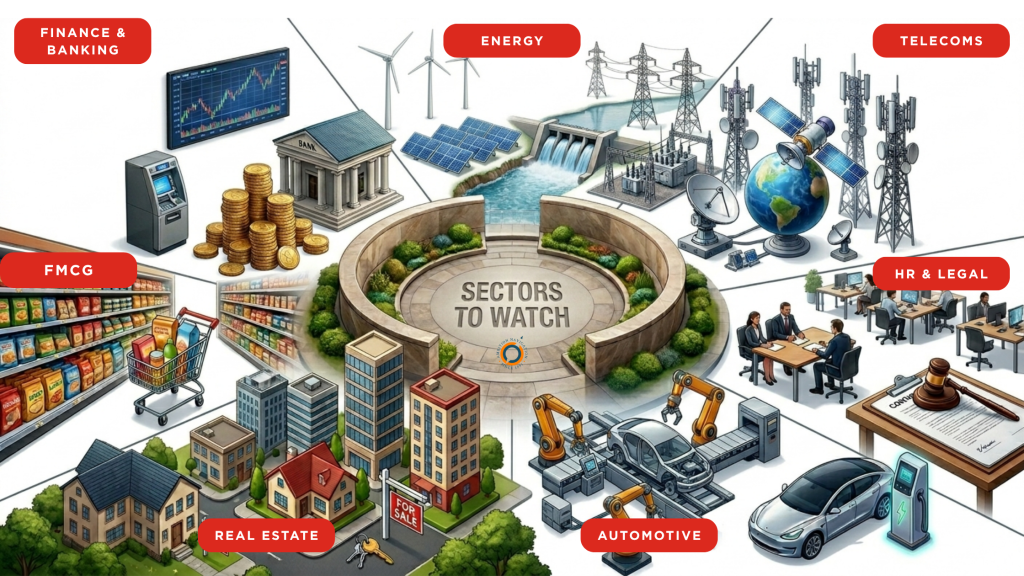
While the overall impact is broad, career creation is likely to concentrate in specific sectors.
Energy stands out as a leading area of opportunity. UK–China cooperation in clean energy is explicitly designed to drive economic growth and job creation in both markets. As investment increases, demand is expected across engineering, project management, maintenance, and clean-tech support roles.
Read more about ABL Recruitment Expands into the Automotive Sector.
Automotive is another key sector, particularly as electric vehicle (EV) investment accelerates. Chinese firms are increasingly linked to battery supply chains and production partnerships, which could support both manufacturing jobs and wider industrial recovery in key regions.
In contrast, real estate represents a more capital-intensive but less employment-heavy sector. While investment may be significant, opportunities tend to be concentrated in construction, property management, and advisory services rather than long-term operational roles.
Professional services, particularly HR and legal, are likely to see immediate demand. As Chinese companies establish UK operations, they require support with compliance, employment law, organisational design, and immigration, creating a steady pipeline of specialist roles.
FMCG offers a more distributed employment impact. As Chinese consumer brands expand into the UK, opportunities arise across logistics, retail, sales, and marketing, often outside traditional financial centres.
Finally, banking and finance remain central. London continues to act as a gateway for Chinese firms seeking international financial access. Notably, fintech was the most popular Chinese investment sector in 2023, with over £500 million in aggregated transaction value, signalling continued demand for roles in compliance, payments, and financial technology.
Regional Impact
The effects of investment from China are unlikely to be evenly distributed.
London is expected to attract a higher concentration of headquarters, financial services, and professional roles. Meanwhile, regions such as the Midlands and the North are more likely to benefit from manufacturing, automotive, logistics, and energy-related investment.
This regional spread reinforces the idea that job creation will not be centralised but shaped by sector-specific activity.
A Balanced Outlook
While the outlook is positive, it is not without complexity.
Not all investments will translate into large-scale hiring, and certain sectors, particularly telecoms, will remain subject to regulatory scrutiny. In addition, the economic impact of Chinese investment is often concentrated in a relatively small number of large firms, meaning growth may be significant but uneven.
Even so, the broader direction is clear. UK exports to China already support an estimated 370,800 UK jobs, highlighting the long-standing link between bilateral trade and employment.
Looking Ahead
The UK–China reset is unlikely to trigger a uniform hiring surge. Instead, it will drive targeted opportunities across sectors tied to innovation, infrastructure, and international growth.
Energy, automotive, and financial services are positioned to benefit most, while other sectors will see more varied outcomes. What is clear, however, is that Chinese investment will continue to influence where and how jobs are created in the UK.
For businesses, the opportunity lies in understanding these shifts early and aligning talent strategies with the sectors where growth is already taking shape.